
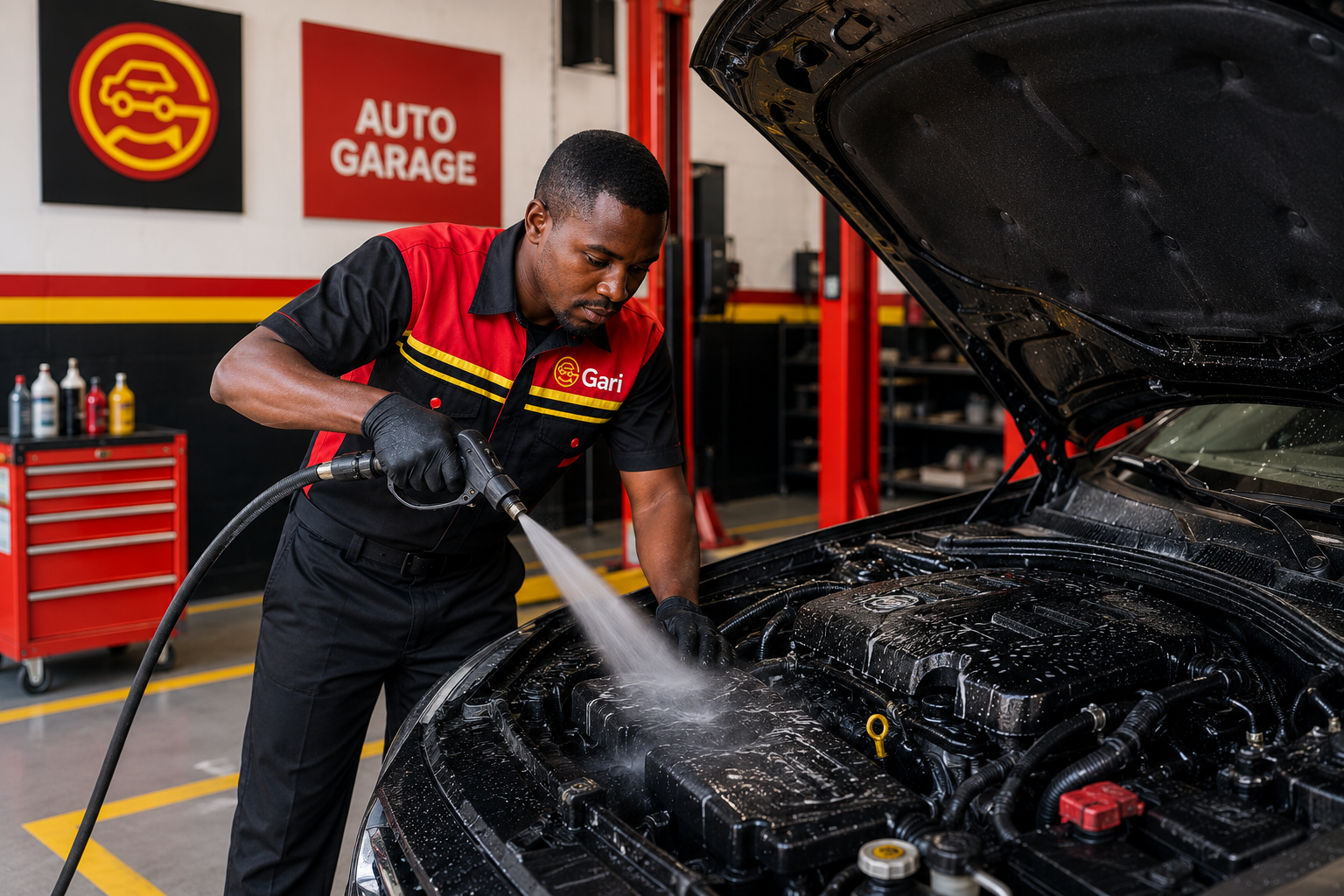
Most drivers in Dar es Salaam will happily wash the outside of the car every week and never once look under the bonnet. Yet the engine bay collects more grime than any panel, and in our climate that grime does real harm. A proper engine wash is not about vanity, it is about protecting one of the most expensive parts of your gari.
It also comes with a warning: an engine wash done carelessly can cause faults. That is exactly why it is worth understanding what it does and why it is best left to people who know how.
What builds up in your engine bay
Under the bonnet, heat and oil mist combine with the things Dar throws at a car: dust during the dry season from June to September, mud splashed up during the Masika rains, and salt carried in the humid coastal air. Over time this forms a baked-on layer of greasy grime that coats hoses, wiring, the battery and the engine block itself.
Why that build-up is a problem
That layer does more than look ugly. Here is why it matters:
- It traps heat. A caked engine runs hotter, and heat is the enemy of engine life in an already hot climate.
- It accelerates corrosion. Salt and moisture held against metal and electrical contacts feed the rust and bad connections that cause starting and electrical faults.
- It hides leaks. A clean engine lets you and your technician spot an oil or coolant leak immediately; a dirty one hides the early warning.
- It degrades rubber and plastic. Oily grime shortens the life of hoses, belts and seals.
The benefits of a clean engine
A correctly cleaned engine bay runs cooler, lasts longer and is far easier to maintain. Technicians can inspect and work on a clean engine properly, leaks are caught early, and the components that fail most in Dar's heat, like the battery terminals and wiring connectors, stay healthier. When you come to sell, a clean and well-kept engine bay also signals a car that has been genuinely cared for.
Why you should not just point a hose at it
Here is the danger. A modern engine is full of sensitive electronics, sensors, connectors and control modules. Blasting it with a high-pressure hose or careless water can force moisture into places it should never go, triggering misfires, warning lights and electrical faults that cost far more than the wash saved. This is the single biggest reason engine washing has a bad reputation: not because it is wrong, but because it is often done wrong.
How a professional engine wash is done
A safe engine wash is a careful process: sensitive components are covered and protected, an appropriate degreaser is applied and given time to work, controlled low-pressure water is used rather than a blast, and the bay is dried properly afterwards so no moisture is left sitting on connectors. Done this way, it is completely safe and genuinely beneficial.
How often does a Dar engine need it?
For most cars here, a professional engine wash once or twice a year is plenty, ideally as part of a service so any leaks or worn components found are addressed at the same time. Cars that drive on dusty or unpaved routes, or that took a beating in the rains, may benefit from it a little more often.
At Gari.com, an engine wash is treated as part of proper maintenance, carried out by technicians who protect the electronics and dry the bay correctly, and who use the clean engine as a chance to inspect for leaks and wear. If you cannot remember the last time anyone looked under your bonnet, that is reason enough to book one, and to find out what your engine has been hiding under all that grime.