A car wash feels like the simplest job in the world. Water, soap, a sponge, done. Yet a surprising amount of the paint damage we see on cars in Dar es Salaam does not come from accidents or the sun, it comes from how the car is washed. The wrong technique, repeated every week, slowly destroys the finish you paid for.
Whether you wash your own gari at home or hand it to the nearest roadside washer, knowing what to watch for will keep your paint looking new for years. Here are the mistakes that matter most in our climate, and how to avoid them.
Mistake 1: Washing in the midday sun
Dar is hot, and panels heat up fast. Washing in direct midday sun makes water and soap dry on the surface before you can rinse them, leaving water spots and soap streaks that bake into the clear coat. Always wash early in the morning or late afternoon, and work in the shade where you can.
Mistake 2: The single bucket and dirty sponge
This is the most common and most damaging mistake. When you dip the same sponge into one bucket of soapy water again and again, you are picking up grit from the panel and dragging it back across the paint. Those tiny scratches build into the fine swirl marks you see catching the light on dark cars. Use the two-bucket method: one bucket with soap, one with clean rinse water, and rinse the mitt between every panel.
Mistake 3: Ignoring sand and salt
Living near the coast, our cars collect fine sand and salt-laden grime that the sea air carries inland. Wiping a dusty, sandy car with a dry cloth is like sanding it. Always rinse thoroughly first to float the grit off before any sponge or cloth touches the paint, and pay attention after a trip to the beach or a drive along the coast road.
Mistake 4: Household soap and the wrong cloths
Dishwashing liquid and laundry soap are cheap, but they strip the protective wax and dry out rubber and plastic trim. Use a proper car shampoo with a neutral pH. The same goes for cloths: rough rags and old towels scratch. Soft microfibre is made for the job, and it is worth the small extra cost.
Mistake 5: Forgetting the parts you cannot see
The shiny panels get all the attention, but in Dar the hidden areas matter just as much. The undercarriage and wheel arches collect mud from the rains and salt from the air, and that mix quietly feeds rust. Rinsing underneath the car, especially during and after the Masika season, protects the metal you never look at.
Mistake 6: Letting the car drip-dry
Leaving your car to dry in the open air sounds harmless, but our mineral-heavy water leaves spots as it evaporates, and in the sun those spots etch into the surface. Dry the car with a clean microfibre towel or a dedicated drying cloth so the finish stays clear and even.
What good washing looks like
Put simply, a safe wash follows this order:
- Park in the shade, never in direct midday sun.
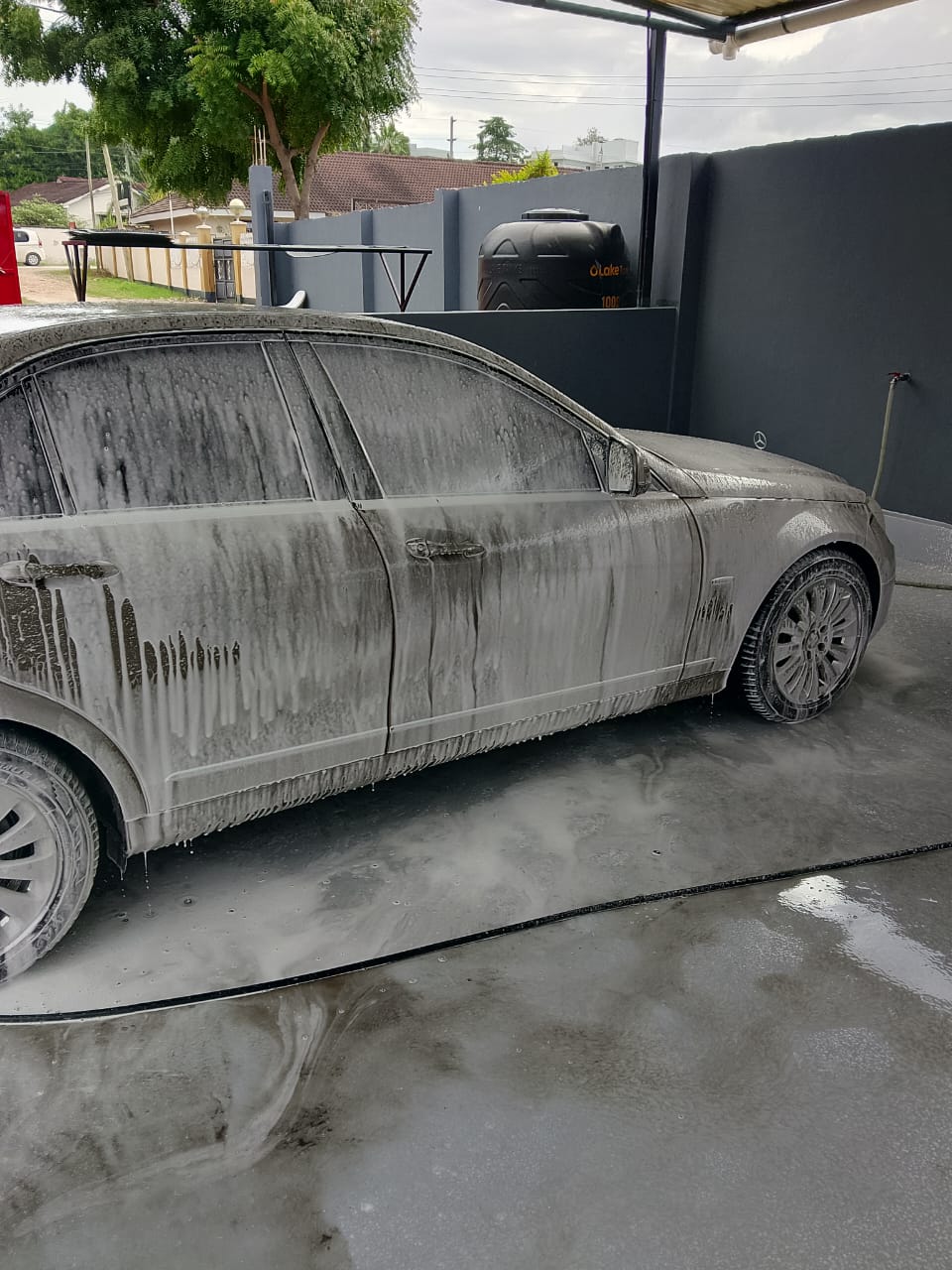
- Rinse the whole car first to remove loose sand, dust and salt.
- Wash top to bottom using car shampoo and the two-bucket method.
- Pay attention to wheels, arches and the undercarriage, especially after rain.
- Rinse fully, then dry with clean microfibre so no spots are left behind.
When to leave it to the professionals
Doing it yourself the right way is good. But a professional wash adds things a driveway wash cannot: controlled water, the correct products, attention to the undercarriage, and finishing protection that helps your paint resist Dar's sun, salt and rain. For a car you want to keep looking new, alternating careful home washes with a professional wash is a smart routine.
At Gari.com, washing is treated as care, not just cleaning. The aim is a finish that protects the paint underneath, not one that quietly wears it away. If you have noticed swirl marks or dull spots creeping into your car, a proper wash and a check of your paint's condition is the place to start, before small damage becomes a respray.